Enrofloxacin: owner quick guide
Educational usage and safety summary.
Start triage first, then route to emergency care.
Need urgent help? Start triage first, then route to emergency care.
Meds A-Z
Detailed information about Enrofloxacin
Veterinary professional?
Choose a pet, confirm current or past, and optionally add reminder notes.
Sign in to save this medication to your pet profile.
Sign in to continueReviewed: Not available
Updated: February 12, 2026, 7:40 PM UTC
Video education and manufacturer materials for Enrofloxacin.
Educational usage and safety summary.
Product-focused promotional video from a distributor source.
Start here first for the simple next-step summary.
Used for:
For the management of diseases associated with bacteria susceptible to enrofloxacin
What to watch for:
When to call the vet:
What to ask your vet today:
What to watch:
Most reported reactions:
When to call your vet:
Data freshness: source data appears current.
Latest refresh: Mar 21, 2026, 10:02 a.m.
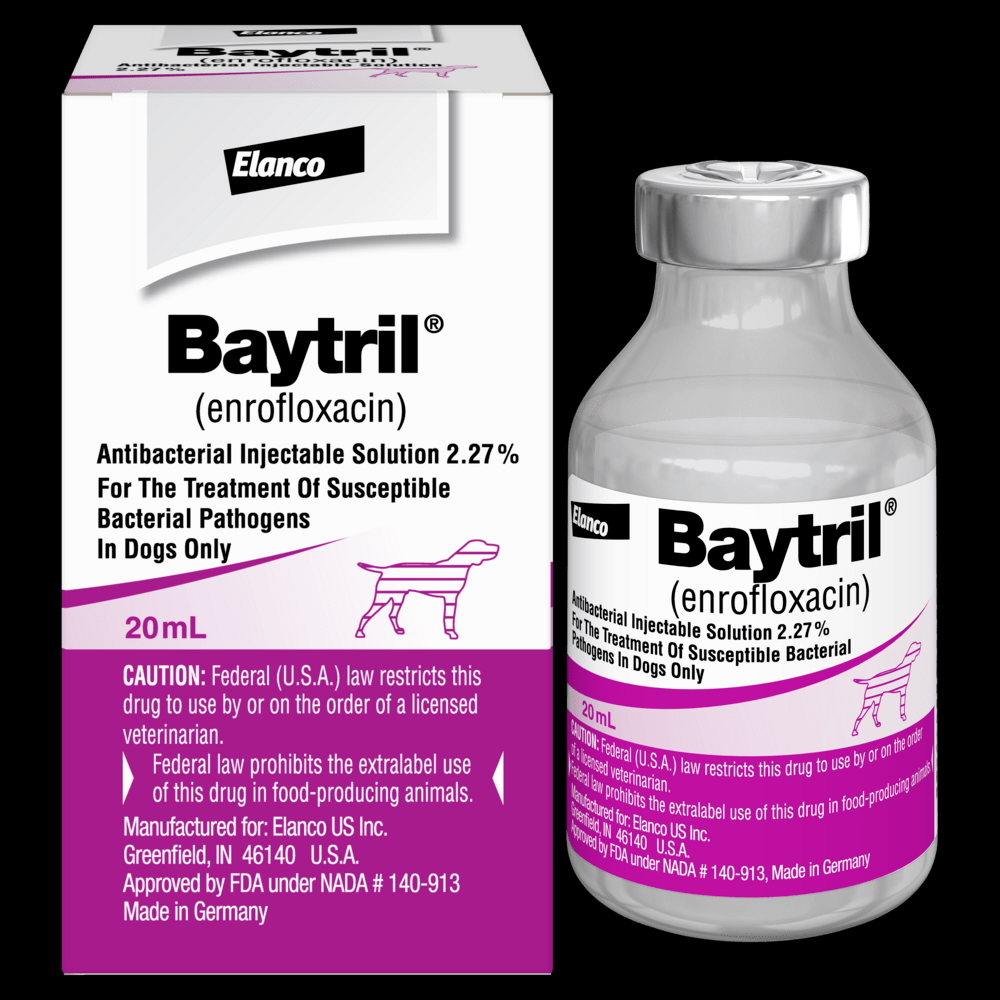
Drug type: Generic ingredient • Branded profile • FDA branded products available
Species: Both
Manufacturer: Elanco US Inc.
Official label facts first, then secondary summaries. Marketing content is separated below.
Use caution in young/growing animals (joint/cartilage risk). Avoid in pets with known fluoroquinolone sensitivity.
Snapshot first, detailed rows second. This section summarizes signal data and is not a diagnosis.
Tap or hover a reaction to see what it means in plain language.
| Reaction | Body system | Cases | Species | Serious cases |
|---|---|---|---|---|
| Digestive | 1 | Cat | 1 | |
| Other | 1 | Cat | 1 | |
| Other | 1 | Cat | 1 | |
| Digestive | 1 | Dog | 1 | |
| Other | 1 | Cat | 1 | |
| Other | 1 | Dog | 1 | |
| Other | 1 | Dog | 1 | |
| Other | 1 | Dog | 1 |
Species coverage: Dog (18) Cat (14)
| Reaction | Body system | Species | Seriousness | Frequency | Reports |
|---|---|---|---|---|---|
| Neurologic | Cat | Non-serious | - | 1 | |
| Digestive | Cat | Serious | - | 1 | |
| Other | Cat | Non-serious | - | 1 | |
| Other | Cat | Non-serious | - | 1 | |
| Other | Cat | Serious | - | 1 | |
| Other | Cat | Serious | - | 1 | |
| Other | Cat | Non-serious | - | 1 | |
| Digestive | Dog | Serious | - | 1 | |
| Other | Cat | Serious | - | 1 | |
| Other | Dog | Serious | - | 1 | |
| Other | Dog | Serious | - | 1 | |
| Other | Dog | Serious | - | 1 | |
| Other | Dog | Serious | - | 1 | |
| Digestive | Cat | Non-serious | - | 1 | |
| Other | Dog | Serious | - | 1 | |
| Other | Dog | Serious | - | 1 | |
| Other | Dog | Serious | - | 1 | |
| Other | Dog | Serious | - | 1 | |
| Behavior | Dog | Serious | - | 1 | |
| Other | Cat | Serious | - | 1 | |
| Other | Dog | Serious | - | 1 | |
| Other | Cat | Serious | - | 1 | |
| Other | Dog | Serious | - | 1 | |
| Other | Dog | Serious | - | 1 | |
| Other | Dog | Serious | - | 1 | |
| Other | Dog | Serious | - | 1 | |
| Other | Dog | Serious | - | 1 | |
| Other | Cat | Serious | - | 1 | |
| Other | Dog | Serious | - | 1 | |
| Other | Dog | Serious | - | 1 | |
| Other | Cat | Serious | - | 1 | |
| Other | Cat | Non-serious | - | 1 |
Store at room temperature away from moisture.
Owner handouts and official technical documents are grouped for faster access.
Canonical medication sections are above. This legacy block remains available for deeper cross-reference without cluttering the primary workflow.
Quick facts and links to official labeling and safety signals.
Global Pet owner/Vet mode is controlled in the header. This section avoids duplicate in-page persona tabs.
Normalized identifiers (NDC/NADA/ANADA) and package metadata from regulator listings.
| Package NDC | Product NDC | Form / Route | Status |
|---|---|---|---|
| 11695-6954-1 | 11695 | - | |
| 11695-6954-5 | 11695 | - | |
| 11695-6955-2 | 11695 | - | |
| 11695-6955-5 | 11695 | - | |
| 11695-6956-2 | 11695 | - | |
| 11695-6956-5 | 11695 | - | |
| 11695-6999-1 | 11695 | - | |
| 11695-7022-1 | 11695 | - | |
| 11695-7022-2 | 11695 | - | |
| 11695-7035-1 | 11695 | - | |
| 11695-7035-2 | 11695 | - | |
| 13985-709-20 | 13985 | - | |
| 13985-709-50 | 13985 | - | |
| 13985-978-05 | 13985 | - | |
| 13985-978-10 | 13985 | - | |
| 13985-979-25 | 13985 | - | |
| 13985-979-50 | 13985 | - | |
| 13985-980-20 | 13985 | - | |
| 13985-980-50 | 13985 | - | |
| 17033-303-10 | 17033 | - |
Documents are tiered by source trust: Official, Clinical, Manufacturer, Marketing.
Every non-trivial field is expected to include provenance and update timestamps.
Marketing/Manufacturer content exists: 1 linked manufacturer ad video are attached to this medication.
Official sponsor/proprietary-name/application-status records linked by active ingredient.
| Product | Sponsor | Application | Status | Published |
|---|---|---|---|---|
|
Enrofloxacin Flavored Tablets
RX
Enrofloxacin
Flavored Tablets
• Oral
|
Hikma Pharmaceuticals USA, Inc. | ANADA 200-810 | Approved | Mar 28, 2025 |
|
EnroPro™ Silver Otic
RX
Enrofloxacin Silver sulfadiazine
Otic emulsion
• Otic
|
Cronus Pharma Specialities India Private Ltd. | ANADA 200-782 | Approved | Jun 3, 2024 |
|
EnroPro™ 100
RX
Enrofloxacin
Injectable Solution
• Intramuscular, Subcutaneous
|
Cronus Pharma Specialities India Private Ltd. | ANADA 200-765 | Approved | Jan 2, 2024 |
|
EnroPro™ 22.7
RX
Enrofloxacin
Injectable Solution
• Intramuscular
|
Cronus Pharma Specialities India Private Ltd. | ANADA 200-764 | Approved | Jan 2, 2024 |
|
Enrofloxacin
RX
Enrofloxacin
Injectable Solution
• Intramuscular, Subcutaneous
|
Felix Pharmaceuticals Pvt. Ltd. | ANADA 200-758 | Approved | Nov 28, 2023 |
|
Baytril® 100-CA1
RX
Enrofloxacin
Injectable Solution
• Subcutaneous
|
Elanco US Inc. | NADA 141-527 | W | May 3, 2023 |
|
Enrofloxacin
RX
Enrofloxacin
Flavored Tablets
• Oral
|
ZYVET AH, Inc. | ANADA 200-737 | Approved | Mar 1, 2023 |
|
Enroflox® Chewable Tablets
RX
Enrofloxacin
Chewable Tablets
• Oral
|
Norbrook Laboratories, Ltd. | ANADA 200-720 | Approved | Apr 1, 2022 |
|
Tenotryl™
RX
Enrofloxacin
Injectable Solution
• Intramuscular, Subcutaneous
|
Virbac AH, Inc. | ANADA 200-688 | Approved | Apr 1, 2022 |
|
Baytril® Antibacterial Tablets Baytril® Taste Tabs® Antibacterial Tablets
RX
Enrofloxacin
Tablet
• Oral
|
Elanco US Inc. | NADA 140-441 | Approved | Mar 30, 2022 |
|
Baytril® Otic
RX
Enrofloxacin Silver sulfadiazine
Liquid (Emulsion)
• Topical
|
Elanco US Inc. | NADA 141-176 | Approved | Mar 8, 2022 |
|
ENROFLOXACIN 100
RX
Enrofloxacin
Injectable Solution
• Subcutaneous, Intramuscular
|
Sparhawk Laboratories, Inc. | ANADA 200-628 | Approved | Nov 1, 2021 |
|
Enrofloxacin
RX
Enrofloxacin
Injectable Solution
• Intramuscular
|
Felix Pharmaceuticals Pvt. Ltd. | ANADA 200-708 | Approved | Sep 1, 2021 |
|
Enrofloxacin
RX
Enrofloxacin
Injectable Solution
• Intramuscular
|
Accord Healthcare, Inc. | ANADA 200-697 | Approved | May 3, 2021 |
|
Baytril® Antibacterial Injectable Solution
RX
Enrofloxacin
Liquid (Solution)
• Intramuscular
|
Elanco US Inc. | NADA 140-913 | Approved | Jan 6, 2021 |
|
Enrofloxacin Flavored Tablets
RX
Enrofloxacin
Flavored Tablets
• Oral
|
Felix Pharmaceuticals Pvt. Ltd. | ANADA 200-680 | Approved | Jun 17, 2020 |
|
EnroMed™ 100
RX
Enrofloxacin
Injectable Solution
• Intramuscular, Subcutaneous, Injection
|
Bimeda Animal Health Limited | ANADA 200-598 | Approved | Jun 3, 2019 |
|
Baytril® Soft Chewable Tablets
RX
Enrofloxacin
Chewable Tablets
• Oral
|
Elanco US Inc. | ANADA 200-608 | Approved | Aug 29, 2018 |
|
Enroflox® 100
RX
Enrofloxacin
Injectable Solution
• Intramuscular, Subcutaneous
|
Norbrook Laboratories, Ltd. | ANADA 200-495 | Approved | Aug 2, 2018 |
|
Enrofloxacin Antibacterial Injectable Solution
RX
Enrofloxacin
Injectable Solution
• Intramuscular
|
Dechra Veterinary Products LLC | ANADA 200-527 | Approved | Jun 1, 2016 |
|
Enrofloxacin Flavored Tablets
RX
Enrofloxacin
Tablet
• Oral
|
Dechra Veterinary Products LLC | ANADA 200-551 | Approved | Jun 1, 2016 |
|
Enroflox™ Injection for Dogs 2.27%
RX
Enrofloxacin
Injectable Solution
• Intramuscular
|
Norbrook Laboratories, Ltd. | ANADA 200-513 | Approved | Jun 1, 2016 |
|
Zobuxa™
RX
Enrofloxacin
Tablet
• Oral
|
Elanco US Inc. | ANADA 200-517 | Approved | Jun 1, 2016 |
Data source: FDA Animal Drugs @ FDA (public search export).
Extracted from FDA Animal Drugs @ FDA product labeling. Always confirm details with your veterinarian.
For the management of diseases associated with bacteria susceptible to enrofloxacin
Administer orally at 5 to 20 milligrams per kilogram (2.27 to 9.07 milligrams per pound) of body weight. The dose may be administered either as a single daily dose or divided into two (2) equal daily doses administered at twelve (12) hour intervals.
For the management of diseases associated with bacteria susceptible to enrofloxacin
Administer orally at 5 milligrams per kilogram (2.27 milligrams per pound) of body weight. The dose may be administered either as a single daily dose or divided into two (2) equal daily doses administered at twelve (12) hour intervals.
FDA page: Open in Animal Drugs @ FDA
As a treatment for canine otitis externa complicated by bacterial and fungal organisms susceptible to enrofloxacin and/or silver sulfadiazine.
Administer 5 to 10 drops per treatment in dogs weighing 35 pounds or less and 10 to 15 drops per treatment in dogs weighing more than 35 pounds. Apply twice daily for a duration of up to 14 days.
FDA page: Open in Animal Drugs @ FDA
For the treatment of bovine respiratory disease (BRD) associated with Mannheimia haemolytica, Pasteurella multocida, and Histophilus somni in beef and non-lactating dairy cattle.
Multiple-day therapy: 2.5 to 5.0 mg/kg of body weight (1.1 to 2.3 mL/100 lb) by subcutaneous injection. Treatment should be repeated at 24-hour intervals for three days. Additional treatments may be given on Days 4 and 5 to animals that have shown clinical improvement but not total recovery. Administered dose volume should not exceed 20 mL per injection site.
For the treatment of bovine respiratory disease (BRD) associated with Mannheimia haemolytica, Pasteurella multocida, and Histophilus somni, and Mycoplasma bovis in beef and non-lactating dairy cattle.
Single-dose therapy: 7.5 to 12.5 mg/kg of body weight (3.4 to 5.7 mL/100 lb) by subcutaneous injection. Administered dose volume should not exceed 20 mL per injection site.
For the control of BRD in beef and non-lactating dairy cattle at high risk of developing BRD associated with M. haemolytica, P. multocida, H. somni and M. bovis.
Single-dose therapy: 7.5 mg/kg of body weight (3.4 mL/100 lb) by subcutaneous injection. Administered dose volume should not exceed 20 mL per injection site.
For the treatment and control of swine respiratory disease (SRD) associated with Actinobacillus pleuropneumoniae, Pasteurella multocida, Haemophilus parasuis, Streptococcus suis, Bordetella bronchiseptica and Mycoplasma hyopneumoniae.
Administer, either by intramuscular or subcutaneous (behind the ear) injection, a single dose of 7.5 mg/kg of body weight (3.4 mL/100 lb).
For the control of colibacillosis in groups or pens of weaned pigs where colibacillosis associated with Escherichia coli has been diagnosed
Administer, either by intramuscular or subcutaneous (behind the ear) injection, a single dose of 7.5 mg/kg of body weight (3.4 mL/100 lb). For the control of colibacillosis, administration should be initiated within the first 60 days post-weaning when clinical signs are present in at least 2% of the animals in the group. If no improvement is noted within 48 hours, the diagnosis should be reevaluated.
FDA page: Open in Animal Drugs @ FDA
For the management of diseases in dogs associated with bacteria susceptible to enrofloxacin.
2.5 milligrams intramuscularly per kilogram (1.13 milligrams per pound) of body weight as a single initial dose only.
FDA page: Open in Animal Drugs @ FDA
For the treatment of bovine respiratory disease (BRD) associated with Mannheimia haemolytica, Pasteurella multocida, Histophilus somni and Mycoplasma bovis in beef and non-lactating dairy cattle
Single-Dose Therapy (BRD Treatment): Administer, by subcutaneous injection, a single dose of 7.5 – 12.5 mg/kg of body weight (3.4 – 5.7 mL/100 lb).
For the control of BRD in beef and non-lactating dairy cattle at high risk of developing BRD associated with M. haemolytica, P. multocida, H. somni and M. bovis.
Single-Dose Therapy (BRD Control): Administer, by subcutaneous injection, a single dose of 7.5 mg/kg of body weight (3.4 mL/100 lb).
For the treatment of bovine respiratory disease (BRD) associated with Mannheimia haemolytica, Pasteurella multocida and Histophilus somni in beef and non-lactating dairy cattle.
Multiple-Day Therapy (BRD Treatment): Administer daily, a subcutaneous dose of 2.5 – 5 mg/kg of body weight (1.1 – 2.3 mL/100 lb). Treatment should be repeated at 24-hour intervals for three days. Additional treatments may be given on Days 4 and 5 to animals that have shown clinical improvement but not total recovery.
For the treatment and control of swine respiratory disease (SRD) associated with Actinobacillus pleuropneumoniae, Pasteurella multocida, Haemophilus parasuis, Streptococcus suis, Bordetella bronchiseptica and Mycoplasma hyopneumoniae; and for the control of colibacillosis in groups or pens of weaned pigs where colibacillosis associated with Escherichia coli has been diagnosed.
Administer, either by intramuscular or subcutaneous (behind the ear) injection, a single dose of 7.5 mg/kg of body weight (3.4 mL/100 lb). Administered dose volume should not exceed 5 mL per injection site. For the control of colibacillosis, administration should be initiated within the first 60 days post-weaning when clinical signs are present in at least 2% of the animals in the group.
FDA page: Open in Animal Drugs @ FDA
Conditionally approved for the treatment of clinical anaplasmosis associated with Anaplasma marginale in replacement dairy heifers under 20 months of age and all classes of beef cattle except beef calves less than 2 months of age and beef bulls intended for breeding (any age). Not for use in any other class of dairy cattle or in veal calves.
Administer as a single dose for treatment of clinical anaplasmosis. Administer, by subcutaneous injection, a single dose of 12.5 mg/kg of body weight (5.7 mL/100 lb). Administered dose volume should not exceed 20 mL per injection site.
FDA page: Open in Animal Drugs @ FDA
For the management of diseases associated with bacteria susceptible to enrofloxacin
Administer orally at a rate to provide 5-20 mg/kg (2.27 to 9.07 mg/lb) of body weight. The dose may be administered either as a single daily dose or divided into two (2) equal daily doses administered at twelve (12) hour intervals. Selection of a dose within the range should be based on clinical experience, the severity of disease, and susceptibility of the pathogen. Animals which receive doses in the upper-end of the dose range should be carefully monitored for clinical signs that may include inappetence, depression, and vomition.
For the management of diseases associated with bacteria susceptible to enrofloxacin
Administer orally at 5 mg/kg (2.27 mg/lb) of body weight. The dose may be administered either as a single daily dose or divided into two (2) equal daily doses administered at twelve (12) hour intervals. The dose should be continued for at least 2-3 days beyond cessation of clinical signs, to a maximum of 30 days.
FDA page: Open in Animal Drugs @ FDA
For the management of diseases associated with bacteria susceptible to enrofloxacin.
Administer orally at a rate to provide 5-20 mg/kg (2.27 to 9.07 mg/lb) of body weight as a single daily dose or divided into two (2) equal daily doses at twelve (12) hour intervals.
For the management of diseases associated with bacteria susceptible to enrofloxacin.
Administer orally at 5 mg/kg (2.27 mg/lb) of body weight as a single daily dose or divided into two (2) equal daily doses at twelve (12) hour intervals.
FDA page: Open in Animal Drugs @ FDA
For the treatment of bovine respiratory disease (BRD) associated with Mannheimia haemolytica, Pasteurella multocida, Histophilus somni and Mycoplasma bovis in beef and non-lactating dairy cattle.
Administer, by subcutaneous injection, a single dose of 7.5 – 12.5 mg/kg of body weight (3.4 – 5.7 mL/100 lb).
For the control of BRD in beef and non-lactating dairy cattle at high risk of developing BRD associated with M. haemolytica, P. multocida, H. somni and M. bovis.
Administer, by subcutaneous injection, a single dose of 7.5 mg/kg of body weight (3.4 mL/100 lb). Administered dose volume should not exceed 20 mL per injection site.
For the treatment of bovine respiratory disease (BRD) associated with Mannheimia haemolytica, Pasteurella multocida and Histophilus somni in beef and non-lactating dairy cattle.
Administer daily, a subcutaneous dose of 2.5 – 5 mg/kg of body weight (1.1 – 2.3 mL/100 lb). Treatment should be repeated at 24-hour intervals for three days. Additional treatments may be given on Days 4 and 5 to animals that have shown clinical improvement but not total recovery.
For the treatment and control of swine respiratory disease (SRD) associated with Actinobacillus pleuropneumoniae, Pasteurella multocida, Haemophilus parasuis, Streptococcus suis, Bordetella bronchiseptica and Mycoplasma hyopneumoniae. It is also indicated for the control of colibacillosis in groups or pens of weaned pigs where colibacillosis associated with Escherichia coli has been diagnosed.
Administer, either by intramuscular or subcutaneous (behind the ear) injection, a single dose of 7.5 mg/kg of body weight (3.4 mL/100 lb). Administered dose volume should not exceed 5 mL per injection site. For the control of colibacillosis, administration should be initiated within the first 60 days post-weaning when clinical signs are present in at least 2% of the animals in the group.
FDA page: Open in Animal Drugs @ FDA
FDA page: Open in Animal Drugs @ FDA
FDA page: Open in Animal Drugs @ FDA
For the treatment of bovine respiratory disease (BRD) associated with Mannheimia haemolytica, Pasteurella multocida, Histophilus somni and Mycoplasma bovis in beef and non-lactating dairy cattle; and for the control of BRD in beef and non-lactating dairy cattle at high risk of developing BRD associated with M. haemolytica, P. multocida, H. somni and M. bovis.
Administer, by subcutaneous injection, a single dose of 7.5-12.5 mg/kg of body weight (3.4-5.7 mL/100 lb).
For the treatment of bovine respiratory disease (BRD) associated with Mannheimia haemolytica, Pasteurella multocida and Histophilus somni in beef and non-lactating dairy cattle.
Administer daily, a subcutaneous dose of 2.5-5 mg/kg of body weight (1.1-2.3 mL/100 lb). Treatment should be repeated at 24-hour intervals for three days. Additional treatments may be given on Days 4 and 5 to animals that have shown clinical improvement but not total recovery.
For the treatment and control of swine respiratory disease (SRD) associated with Actinobacillus pleuropneumoniae, Pasteurella multocida, Haemophilus parasuis, Streptococcus suis, Bordetella bronchiseptica and Mycoplasma hyopneumoniae. It is also indicated for the control of colibacillosis in groups or pens of weaned pigs where colibacillosis associated with Escherichia coli has been diagnosed.
Administer, either by intramuscular or subcutaneous (behind the ear) injection, a single dose of 7.5 mg/kg of body weight (3.4 mL/100 lb). Administered dose volume should not exceed 5 mL per injection site. For the control of colibacillosis, administration should be initiated within the first 60 days post-weaning when clinical signs are present in at least 2% of the animals in the group.
FDA page: Open in Animal Drugs @ FDA
For the management of diseases in dogs associated with bacteria susceptible to enrofloxacin.
Enrofloxacin Injectable Solution may be used as the initial dose at 2.5 mg/kg. It should be administered intramuscularly (IM) as a single dose, followed by initiation of enrofloxacin tablet therapy. The initial enrofloxacin injectable administration should be followed 12 hours later by initiation of enrofloxacin tablet therapy.
FDA page: Open in Animal Drugs @ FDA
For the management of diseases in dogs associated with bacteria susceptible to enrofloxacin.
Enrofloxacin Injectable Solution may be used as the initial dose at 2.5 mg/kg. It should be administered intramuscularly (IM) as a single dose, followed by initiation of enrofloxacin tablet therapy. The initial Enrofloxacin Injectable administration should be followed 12 hours later by initiation of enrofloxacin tablet therapy.
FDA page: Open in Animal Drugs @ FDA
As a single, intramuscular, initial dose followed by use of tablets twice daily for 2 to 3 days beyond cessation of clinical signs to a maximum of 30 days.
FDA page: Open in Animal Drugs @ FDA
For the management of diseases associated with bacteria susceptible to enrofloxacin.
Administer orally at a rate to provide 5-20 mg/kg (2.27 to 9.07 mg/lb) of body weight. May be administered either as a single daily dose or divided into two (2) equal daily doses administered at twelve (12) hour intervals. The dose should be continued for at least 2-3 days beyond cessation of clinical signs to a maximum of 30 days.
For the management of diseases associated with bacteria susceptible to enrofloxacin.
Administer orally at 5 mg/kg (2.27 mg/lb) of body weight. May be administered either as a single daily dose or divided into two (2) equal daily doses administered at twelve (12) hour intervals. The dose should be continued for at least 2-3 days beyond cessation of clinical signs to a maximum of 30 days.
FDA page: Open in Animal Drugs @ FDA
For the treatment of bovine respiratory disease (BRD) associated with Mannheimia haemolytica, Pasteurella multocida, Histophilus somni and Mycoplasma bovis in beef and non-lactating dairy cattle; and for the control of BRD in beef and non-lactating dairy cattle at high risk of developing BRD associated with M. haemolytica, P. multocida, H. somni and M. bovis.
Single-Dose Therapy (BRD Treatment): Administer, by subcutaneous injection, a single dose of 7.5-12.5 mg/kg of body weight (3.4-5.7 mL/100 lb).
For the treatment of bovine respiratory disease (BRD) associated with Mannheimia haemolytica, Pasteurella multocida and Histophilus somni in beef and non-lactating dairy cattle.
Multiple-Day Therapy (BRD Treatment): Administer daily, a subcutaneous dose of 2.5-5 mg/kg of body weight (1.1-2.3 mL/100 lb). Treatment should be repeated at 24-hour intervals for three days. Additional treatments may
be given on Days 4 and 5 to animals that have shown clinical improvement but not total recovery.
For the treatment and control of swine respiratory disease (SRD) associated with Actinobacillus pleuropneumoniae, Pasteurella multocida, Haemophilus parasuis, Streptococcus suis, Bordetella bronchiseptica and Mycoplasma hyopneumoniae. and for the control of colibacillosis in groups or pens of weaned pigs where colibacillosis associated with Escherichia coli has been diagnosed.
Administer, either by intramuscular or subcutaneous (behind the ear) injection, a single dose of 7.5 mg/kg of body weight (3.4 mL/100 lb). Administered dose volume should not exceed 5 mL per injection site.
FDA page: Open in Animal Drugs @ FDA
For the management of diseases associated with bacteria susceptible to enrofloxacin.
Administer orally at 5 mg/kg (2.27 mg/lb) of body weight. The dose for dogs and cats may be administered either as a single daily dose or divided into two (2) equal daily doses administered at twelve (12) hour intervals. The dose should be continued for at least 2-3 days beyond cessation of clinical signs, to a maximum of 30 days. All tablet sizes are double scored for accurate dosing.
For use in animals only. In rare instances, use of this product in cats has been associated with Retinal Toxicity. Do not exceed 5 mg/kg of body weight per day in cats. Safety in breeding or pregnant cats has not been established. Keep out of reach of children.
Federal law restricts this drug to use by or on the order of a licensed veterinarian.
Federal law prohibits the extra label use of this drug in food-producing animals.
Quinolone-class drugs should be used with caution in animals with known or suspected Central Nervous System (CNS) disorders. In such animals, quinolones have, in rare instances, been associated with CNS stimulation which may lead to convulsive seizures.
For the management of diseases associated with bacteria susceptible to enrofloxacin.
Administer orally at a rate to provide 5-20 mg/kg (2.27 to 9.07 mg/lb) of body weight. Selection of a dose within the range should be based on clinical experience, the severity of disease, and susceptibility of the pathogen. Animals which receive doses in the upper-end of the dose range should be carefully monitored for clinical signs that may include inappetence, depression, and vomition. All tablet sizes are double scored for accurate dosing.
The use of enrofloxacin is contraindicated in small and medium breeds of dogs during the rapid growth phase (between 2 and 8 months of age). The safe use of enrofloxacin has not been established in large and giant breeds of dogs during the rapid growth phase.
For use in animals only. Keep out of reach of children.
Federal law restricts this drug to use by or on the order of a licensed veterinarian.
Federal law prohibits the extra label use of this drug in food-producing animals.
Quinolone-class drugs should be used with caution in animals with known or suspected Central Nervous System (CNS) disorders. In such animals, quinolones have, in rare instances, been associated with CNS stimulation which may lead to convulsive seizures.
FDA page: Open in Animal Drugs @ FDA
Enroflox 100 is indicated for the treatment and control of swine respiratory disease (SRD) associated with Actinobacillus pleuropneumoniae, Pasteurella multocida, Haemophilus parasuis and Streptococcus suis, Bordetella bronchiseptica and Mycoplasma hyopneumoniae.
Enroflox 100 is indicated for the control of colibacillosis in groups or pens of weaned pigs where colibacillosis associated with Escherichia coli has been diagnosed.
Administer, either by intramuscular or subcutaneous (behind the ear) injection, a single dose of 7.5 mg/kg of body weight (3.4 mL/100 lb). Administered dose volume should not exceed 5 mL per injection site. For the control of colibacillosis, administrations should be initiated within the first 60 days post-weaning when clinical signs are present in at least 2% of the animals in the group.
Animals intended for human consumption must not be slaughtered within five days of receiving a single-injection dose.
Enroflox 100 is indicated for the treatment of bovine respiratory disease (BRD) associated with Mannheimia haemolytica, Pasteurella multocida, Histophilus somni and Mycoplasma bovis in beef and non-lactating dairy cattle.
Animals intended for human consumption must not be slaughtered within 28 days from the last treatment. This product is not approved for female dairy cattle 20 months of age or older, including dry dairy cows. Use in these cattle may cause drug residues in milk and/or in calves born to these cows. A withdrawal period has not been established for this product in pre-ruminating calves. Do not use in calves to be processed for veal.
Enroflox 100 is indicated for the control of BRD in beef and non-lactating dairy cattle at high risk of developing BRD associated with M. haemolytica, P. multocida, H. somni and M. bovis.
Animals intended for human consumption must not be slaughtered within 28 days from the last treatment. This product is not approved for female dairy cattle 20 months of age or older, including dry dairy cows. Use in these cattle may cause drug residues in milk and/or in calves born to these cows. A withdrawal period has not been established for this product in pre-ruminating calves. Do not use in calves to be processed for veal.
Administer daily, a subcutaneous dose of 2.5-5 mg/kg of body weight (1.1-2.3 mL/100 lb). Treatment should be repeated at 24-hour intervals for three days. Additional treatments may be given on Days 4 and 5 to animals that have shown clinical improvement but not total recovery.
Animals intended for human consumption must not be slaughtered within 28 days from the last treatment. This product is not approved for female dairy cattle 20 months of age or older, including dry dairy cows. Use in these cattle may cause drug residues in milk and/or in calves born to these cows. A withdrawal period has not been established for this product in pre-ruminating calves. Do not use in calves to be processed for veal.
FDA page: Open in Animal Drugs @ FDA
FDA page: Open in Animal Drugs @ FDA
FDA page: Open in Animal Drugs @ FDA
FDA page: Open in Animal Drugs @ FDA
FDA page: Open in Animal Drugs @ FDA
Direct links to FDA-hosted PDFs and SPL packages (when available).
For the management of diseases associated with bacteria susceptible to enrofloxacin in dogs and cats.
FDA page: Open in Animal Drugs @ FDA
As a treatment for canine otitis externa complicated by bacterial and fungal organisms susceptible to enrofloxacin and/or silver sulfadiazine.
FDA page: Open in Animal Drugs @ FDA
Cattle- Single-Dose Therapy: For the treatment of bovine respiratory disease (BRD) associated with Mannheimia haemolytica, Pasteurella multocida, Histophilus somni and Mycoplasma bovis in beef and non-lactating dairy cattle; and for the control of BRD in beef and non-lactating dairy cattle at high risk of developing BRD associated with M. haemolytica, P. multocida, H. somni and M. bovis.
Cattle- Multiple-Day Therapy: For the treatment of bovine respiratory disease (BRD) associated with Mannheimia haemolytica, Pasteurella multocida and Histophilus somni in beef and non-lactating dairy cattle.
Swine: For the treatment and control of swine respiratory disease (SRD) associated with Actinobacillus pleuropneumoniae, Pasteurella multocida, Haemophilus parasuis, Streptococcus suis, Bordetella bronchiseptica and Mycoplasma hyopneumoniae. For the control of colibacillosis in groups or pens of weaned pigs where colibacillosis associated with Escherichia coli has been diagnosed.
FDA page: Open in Animal Drugs @ FDA
For the management of diseases in dogs associated with bacteria susceptible to enrofloxacin.
FDA page: Open in Animal Drugs @ FDA
Cattle- Single-Dose Therapy: For the treatment of bovine respiratory disease (BRD) associated with Mannheimia haemolytica, Pasteurella multocida, Histophilus somni and Mycoplasma bovis in beef and non-lactating dairy cattle; and for the control of BRD in beef and non-lactating dairy cattle at high risk of developing BRD associated with M. haemolytica, P. multocida, H. somni and M. bovis.
Cattle- Multiple-Day Therapy: For the treatment of bovine respiratory disease (BRD) associated with Mannheimia haemolytica, Pasteurella multocida and Histophilus somni in beef and non-lactating dairy cattle.
Swine: For the treatment and control of swine respiratory disease (SRD) associated with Actinobacillus pleuropneumoniae, Pasteurella multocida, Haemophilus parasuis, Streptococcus suis, Bordetella bronchiseptica and Mycoplasma hyopneumoniae; and for the control of colibacillosis in groups or pens of weaned pigs where colibacillosis associated with Escherichia coli has been diagnosed.
FDA page: Open in Animal Drugs @ FDA
For the treatment of clinical anaplasmosis associated with Anaplasma marginale in replacement dairy heifers under 20 months of age and all classes of beef cattle except beef calves less than 2 months of age and beef bulls intended for breeding (any age). Not for use in any other class of dairy cattle or in veal calves.
FDA page: Open in Animal Drugs @ FDA
For the management of diseases associated with bacteria susceptible to enrofloxacin
FDA page: Open in Animal Drugs @ FDA
For the management of diseases associated with bacteria susceptible to enrofloxacin.
FDA page: Open in Animal Drugs @ FDA
Cattle-Single-Dose Therapy: For the treatment of bovine respiratory disease (BRD) associated with Mannheimia haemolytica, Pasteurella multocida, Histophilus somni and Mycoplasma bovis in beef and non-lactating dairy cattle; and for the control of BRD in beef and non-lactating dairy cattle at high risk of developing BRD associated with M. haemolytica, P. multocida, H. somni and M. bovis.
Cattle-Multiple-Day Therapy: For the treatment of bovine respiratory disease (BRD) associated with Mannheimia haemolytica, Pasteurella multocida and Histophilus somni in beef and non-lactating dairy cattle.
Swine: For the treatment and control of swine respiratory disease (SRD) associated with Actinobacillus pleuropneumoniae, Pasteurella multocida, Haemophilus parasuis, Streptococcus suis, Bordetella bronchiseptica and Mycoplasma hyopneumoniae. It is also indicated for the control of colibacillosis in groups or pens of weaned pigs where colibacillosis associated with Escherichia coli has been diagnosed.
FDA page: Open in Animal Drugs @ FDA
This supplemental application amends the NADA to remove the contradiction against use in breeding female dogs.
For the treatment of dermal infections, respiratory infections, and urinary cystitis caused by susceptible strains of bacteria in dogs.
FDA page: Open in Animal Drugs @ FDA
FDA page: Open in Animal Drugs @ FDA
Cattle - Single-Dose Therapy: For the treatment of bovine respiratory disease (BRD) associated with Mannheimia haemolytica, Pasteurella multocida, Histophilus somni and Mycoplasma bovis in beef and non-lactating dairy cattle; and for the control of BRD in beef and nonlactating dairy cattle at high risk of developing BRD associated with M. haemolytica, P. multocida, H. somni and M. bovis.
Cattle - Multiple-Day Therapy: For the treatment of bovine respiratory disease (BRD) associated with Mannheimia haemolytica, Pasteurella multocida and Histophilus somni in beef and nonlactating dairy cattle.
Swine: For the treatment and control of swine respiratory disease (SRD) associated with Actinobacillus pleuropneumoniae, Pasteurella multocida, Haemophilus parasuis, Streptococcus suis, Bordetella bronchiseptica and Mycoplasma hyopneumoniae. It is also indicated for the control of colibacillosis in groups or pens of weaned pigs where colibacillosis associated with Escherichia coli has been diagnosed.
FDA page: Open in Animal Drugs @ FDA
For the management of diseases in dogs associated with bacteria susceptible to enrofloxacin.
FDA page: Open in Animal Drugs @ FDA
For the management of diseases in dogs associated with bacteria susceptible to enrofloxacin
FDA page: Open in Animal Drugs @ FDA
Baytril (brand of enrofloxacin) Antibacterial Tablets and Injectable Solution are indicated for the treatment of the following bacterial infections in dogs: Dermal infections (wounds and abscesses) caused by susceptible strains of Escherichia coli, Klebsiella pneumoniae , Proteus mirabilis, and Staphylococcus aureus. Respiratory infections (pneumonia, tonsillitis, rhinitis) caused by susceptible strains of Escherichia coli and Staphylococcus aureus. Urinary cystitis caused by susceptible strains of Escherichia coli, Proteus mirabilis and Staphylococcus aureus.
FDA page: Open in Animal Drugs @ FDA
For the management of diseases associated with bacteria susceptible to enrofloxacin in dogs and cats.
FDA page: Open in Animal Drugs @ FDA
Cattle-Single-Dose Therapy: For the treatment of bovine respiratory disease (BRD) associated with Mannheimia haemolytica, Pasteurella multocida, Histophilus somni and Mycoplasma bovis in beef and non-lactating dairy cattle; and for the control of BRD in beef and non-lactating dairy cattle at high risk of developing BRD associated with M. haemolytica, P. multocida, H. somni and M. bovis.
Cattle-Multiple-Day Therapy: For the treatment of bovine respiratory disease (BRD) associated with Mannheimia haemolytica, Pasteurella multocida and Histophilus somni in beef and non-lactating dairy cattle.
Swine: For the treatment and control of swine respiratory disease (SRD) associated with Actinobacillus pleuropneumoniae, Pasteurella multocida, Haemophilus parasuis, Streptococcus suis, Bordetella bronchiseptica and Mycoplasma hyopneumoniae and for the control of colibacillosis in groups or pens of weaned pigs where colibacillosis associated with Escherichia coli has been diagnosed.
FDA page: Open in Animal Drugs @ FDA
For the management of diseases associated with bacteria susceptible to enrofloxacin.
FDA page: Open in Animal Drugs @ FDA
The effect of the supplement provides for the addition of the use of the drug via intramuscular injection in swine, the addition of two pathogens, Bordetella bronchiseptica and Mycoplasma hyopneumoniae, to the swine respiratory disease (SRD) treatment and control indications and the addition of indications for the control of colibacillosis in groups or pens of weaned pigs where colibacillosis associated with Escherichia coli has been diagnosed.
Cattle: For the treatment of bovine respiratory disease (BRD) associated with Mannheimia haemolitica, Pasturella multocida, and Histophilus somni in beef and non-lactating dairy cattle (multiple-day therapy).
Swine: For the treatment and control of swine respiratory disease (SRD) associated with Actinobacillus pleuropneumoniae, Pasteurella multocida, Haemophilus parasuis, and Streptococcus suis.
FDA page: Open in Animal Drugs @ FDA
FDA page: Open in Animal Drugs @ FDA
FDA page: Open in Animal Drugs @ FDA
FDA page: Open in Animal Drugs @ FDA
FDA page: Open in Animal Drugs @ FDA
Fluoroquinolone antibiotic used for susceptible bacterial infections.
Source: FDA Animal Drugs @ FDA • Reference
Use caution in young/growing animals (joint/cartilage risk). Avoid in pets with known fluoroquinolone sensitivity.
GI upset. In cats, high doses can cause retinal toxicity and vision loss.
Source: FDA openFDA • Reference
De-duplicated reaction terms grouped by body system from FDA openFDA reports (not verified; does not prove causation).
Showing top 5 for Digestive.
Showing top 5 for Neurologic.
Showing top 5 for Behavior.
Showing top 5 for Other.
Data source: FDA openFDA Animal & Veterinary adverse event reports.
These are individual FDA adverse event reports. They are unverified and do not prove the medication caused the reaction.
Cat, Cat (unknown), Female, 14 year, 4.17 kilogram • Drug: MSK, Emulsion, Auricular (Otic), Frequency: 1 per day • Reactions: Ear canal disorder, Tiredness (lethargy), Head shake - ear disorder • Outcome: Ongoing
Dog, ['Terrier - Jack Russell', 'Dog (unknown)'], Male, 12 year, 13.61 kilogram • Drug: MSK, Unassigned, Unknown • Reactions: Localised hair loss, Claw / hoof / nail disorder NOS, Crust, Itching, Bacterial skin infection NOS… • Outcome: Ongoing
Cat, Domestic Mediumhair, Female, 13 year, 2.858 kilogram • Drug: MSK, Solution, Unknown • Reactions: Tiredness (lethargy), Unresponsive to stimuli, Not eating, Not drinking, Hiding… • Outcome: Ongoing
Dog, Shepherd Dog - Australian, Male, 6 year, 17.872 kilogram • Drug: MSK, Solution, Unknown • Reactions: Abscess NOS, Dehiscence, Dermatitis, Pain NOS, Fever… • Outcome: Euthanized
Dog, Terrier - West Highland White, Male, 13 year, 8.346 kilogram • Drug: MSK, Tablet, Oral • Reactions: Lack of efficacy - NOS • Outcome: Outcome Unknown
Dog, Schnauzer - Miniature, Male, 2 year, 11.567 kilogram • Drug: MSK, Tablet, chewable, Oral • Reactions: Urinary tract infection, Fever, Prostatitis, Knuckling, Proprioception deficit… • Outcome: Ongoing
Dog, ['Pinscher - Miniature', 'Dog (unknown)'], Female, 9 year, 5.625 kilogram • Drug: MSK, Unassigned, Unknown • Reactions: Weakness, Loss of appetite, Confusion, Faecal incontinence, Urinary incontinence… • Outcome: Ongoing
Dog, Terrier (unspecified), Female, 15 year, 4.264 kilogram • Drug: MSK, Unassigned, Unknown • Reactions: Seizure NOS, Not defecating, Fever, Tiredness (lethargy), Localised pain NOS… • Outcome: Ongoing
Data source: FDA openFDA Animal & Veterinary adverse event reports.
Overdose may exacerbate GI and neurologic signs; in cats, high doses increase the risk of irreversible blindness. Supportive care is required.
Store at room temperature away from moisture.
Let others know your experience or advice regarding this medication.
This medication has not been reviewed by a veterinarian yet.